
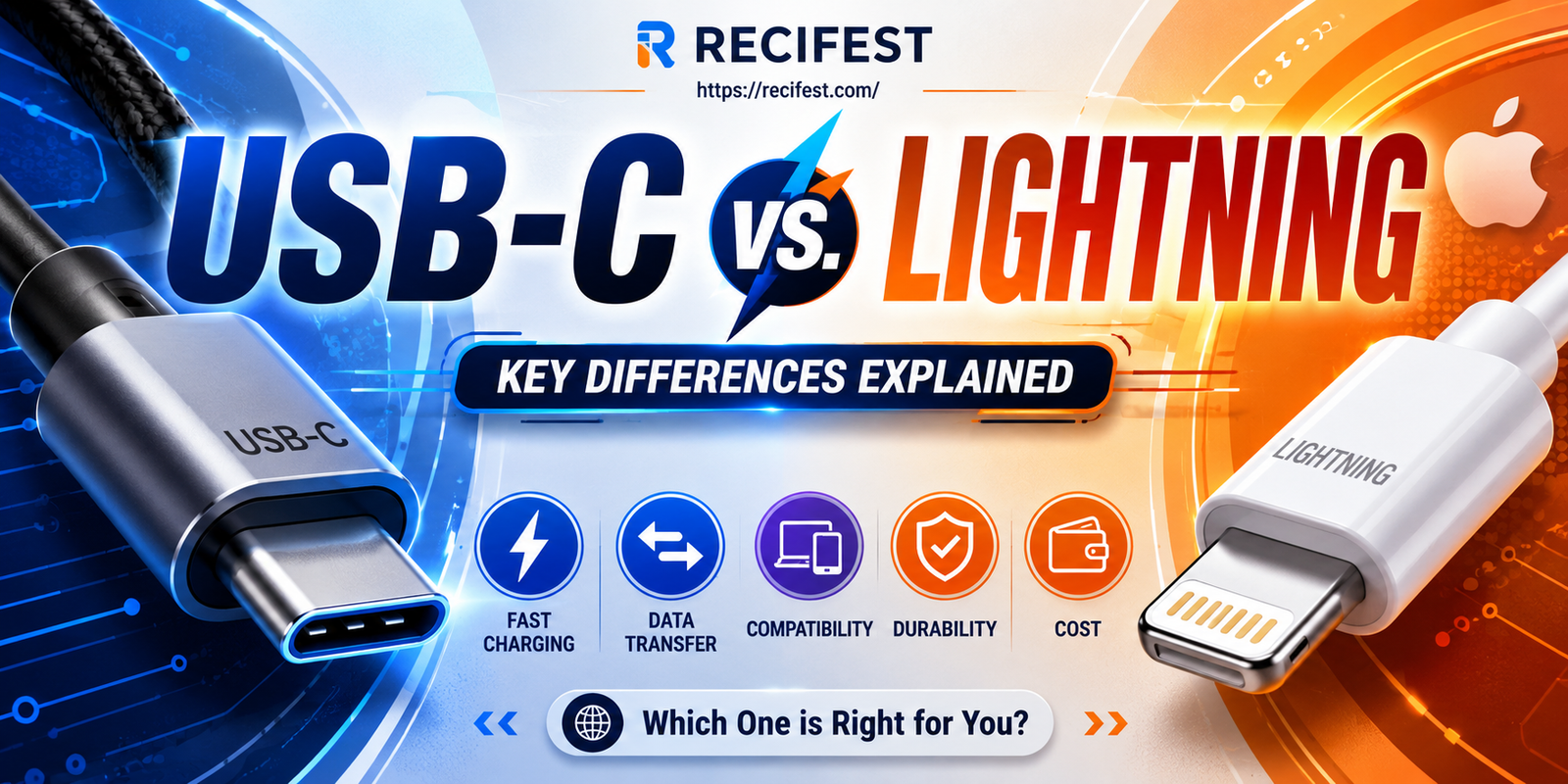
With the ongoing advancements in charging and data transfer technologies, the USB C vs Lightning discussion remains relevant to consumers, companies, and tech enthusiasts. The roll-out of USB-C over Apple’s product lineup has driven more people to want to know what the difference is between USB C and Lightning connectors.
This guide outlines the pros, cons and uses of both standards, while adhering to Google’s E-E-A-T standards by involving accurate, experience-based and trustworthy analysis.
What Is USB-C?
The USB-C is a universal connector standard designed to be a single solution for charging, data transfer, audio, video output and accessory connections. The ability to be reversed, its wide acceptance and the compatibility with advanced technologies like USB4 and Power Delivery make it the choice connector on smartphones, tablets, laptops and peripherals.
What is a Lightning Connector?
The Lightning connector was launched by Apple in 2012 to replace the 30-pin connector they had previously used. The design of being small and reversible was a hallmark of iPhones and Apple products. The Lightning ecosystem provided Apple users with convenience and reliability for many years.
What are the differences between USB C and Lightning?The differences between USB C and Lightning:
- Compatibility
Lightning vs USB C is most notably in the compatibility. Whereas Lightning was specific to Apple products, USB-C is the industry standard and supported by a number of technology companies.
- Data Transfer Performance
With much higher transfer speeds, USB-C is perfect for professionals who often transfer large files, videos, and backups. Lightning technology is traditionally used on much lower transfer rates.
- Charging Efficiency
In terms of performance, USB-C offers increased power output and features cutting-edge fast charging capabilities compared to Lightning cable. This allows for faster charging of smartphones and tablets and even laptop computers.
Besides the above, 4. Video and Display Support includes the following features:
USB-C is capable of sending video signals to external monitors and displays. This is a very helpful for productivity users, content creators, and business users. Adapters for similar functionality are normally required for lightning.
When it comes to Lightning Cable vs USB C, there are some differences in the design.Lightning Cable vs USB C: Design Difference
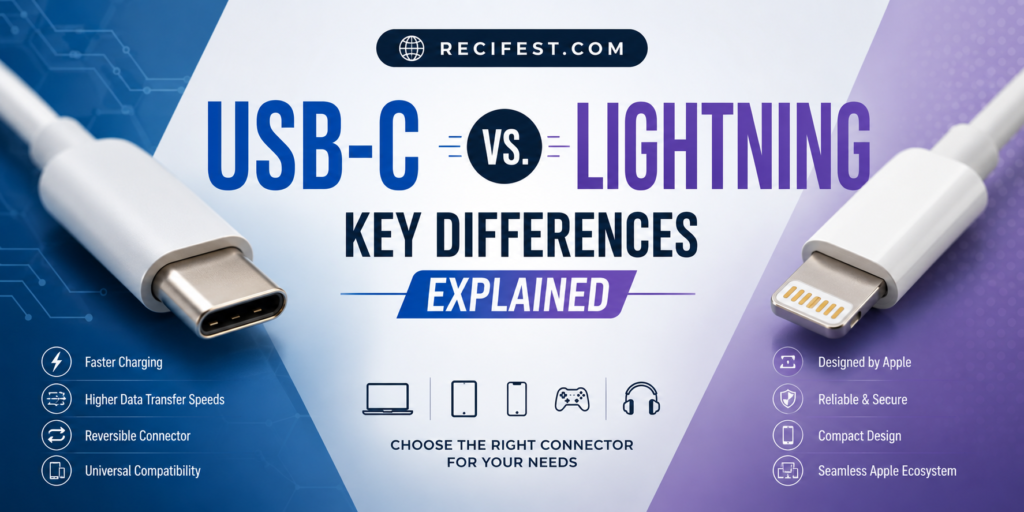
Both connectors are reversible and easy to use from a design point of view. But USB-C has more flexibility due to the fact that it can charge a lot of devices which include smartphones, high-performance laptops and so on.
The advantage of being compact still makes many users appreciate Lightning connectors, but with their universal adoption in the industry, USB-C is the preferred option.
What’s The Best Shopping For Useable C vs Lightning Cable?
Most contemporary devices get better charging speeds from USB-C. The USB Power Delivery technology is a more intelligent, faster power management solution that decreases charging times and increases charging efficiency.
If an organization is using several different types of devices then USB-C might be a better option as it may be able to power many different products from different manufacturers.
For Businesses, There is a difference between USB C and Lightning.
The advantages of USB-C for businesses include:
Small and effective reduction in cable management complexity.
- Lower accessory costs
- Improved device interoperability
- Faster data synchronization
- Simplified IT support
All these benefits help to reduce operating expenses and user satisfaction.
The difference between lightning and USB C for Apple users.
If you are an Apple user coming from iPhone 6/6s and older, you will find that there are some advantages to making the switch to USB-C:
- Greater accessory compatibility
- Faster charging capabilities
Enhanced connectivity to laptops and tablets. - Easier to transport than a proprietary system with its own proprietary accessories.
Apple’s constant move to USB-C benefits users with an overall tighter techno-ecosystem.
Considerations of Security and Reliability
Both connection standards work well, as long as they are connected with certified accessories. It is always best to buy the best Quality cables from a trusted brand so that the users can safely charge their batteries and use them optimally.
Future Outlook
The technology industry is slowly working towards a universal connectivity standard. From regulatory requirements to consumer demand and compatibility across devices, USB-C is gaining traction globally.
Although Lightning has been a significant factor in the evolution of mobile devices, the current focus seems to be on USB-C as the future of data transfer and charging.
Conclusion
In terms of USB C vs Lightning, it’s evident that USB C boasts more versatility, superior charging capabilities, high-speed data transfer, and a more enduring worth. Lightning is still in use with older Apple products, but the future of connectivity is increasingly by way of USB-C.
If you are a consumer, a professional or a business who want a future-proof option, then USB-C is the most flexible and expandable option you can get today.
